
Bank FX dealer
$95,000 – $400,000
Quotes prices for corporate clients. Salary plus bonus, no personal capital at risk.
Currency markets
Forex is the biggest market in the world and the one with the loudest marketing. Here is where FX income genuinely comes from — the salaried desks, the funded accounts, and what leverage really does to a retail balance.
$95,000 – $400,000
Quotes prices for corporate clients. Salary plus bonus, no personal capital at risk.
$80,000 – $220,000
Protects a company from currency swings. Steady, unglamorous, well paid.
$0 – $250,000
Profit split on firm capital after passing a drawdown-limited evaluation.

$0 – $120,000
Most retail accounts lose money. Regulators publish the numbers — read them first.

$110,000 – $350,000
Code, latency and statistics rather than chart reading.

$15,000 – $200,000
Paid on client volume, not on trading skill.
At 30:1, a 1% move against a position wipes out roughly a third of the margin behind it. Leverage does not create edge — it multiplies whatever edge, or lack of it, you already have.
Position size is the only variable a beginner fully controls. Fix risk per trade as a small percentage of the account and the account survives long enough to learn.
Every trade pays the spread, holding overnight pays or earns swap, and news moves fill you away from your price. Frequent trading multiplies all three.
London and New York overlap carries most of the liquidity. Thin sessions widen spreads and produce the false breakouts that punish new traders.
Evaluation firms test consistency and drawdown, not heroics. Passing usually means small, repeatable gains — the opposite of what the adverts show.
Trade only with a broker licensed in a recognised jurisdiction, with segregated client funds and published execution statistics.
Educational information only — not financial advice. Forex trading is high risk and most retail accounts lose money.
Foreign exchange is the largest financial market on earth, turning over trillions of dollars every single day, and almost none of that volume comes from the retail traders the advertising is aimed at. It comes from banks, corporations, central banks, pension funds and exporters moving real money for real reasons. Understanding that one fact reframes the whole industry. There is enormous, reliable income in FX — but the bulk of it is paid as salary to people who service that institutional flow, not as profit to individuals speculating on a five-minute chart. This guide covers every genuine route to earning from currency markets, what each pays, and what it takes to get there.
Retail FX is the most accessible market in existence: it runs twenty-four hours a day for five days a week, accounts open with very little money, and leverage lets a small balance control a large position. Every one of those features is a double-edged sword. Regulators in Europe, the UK and Australia require brokers to publish the percentage of retail accounts that lose money, and the figure consistently lands between seventy and eighty per cent. That is not a conspiracy — it is what happens when leverage meets transaction costs meets human impulse. The traders who survive do three unglamorous things. They risk a fixed small fraction of the account per trade, usually half a per cent to one per cent. They trade a small number of pairs they genuinely understand rather than everything that moves. And they trade during the London and New York overlap when spreads are tightest, rather than in thin sessions where costs quietly double.
Cost control matters far more in FX than in shares, because activity is higher. Every round trip pays the spread, every overnight hold pays or earns swap interest, and every news release risks slippage. A strategy that looks profitable on paper often dies purely on costs once it is traded a hundred times a month. Before risking anything, model your expected trade frequency against your spread and swap and see what return you need just to break even.
FX education has a reputation problem for good reason: the affiliate model rewards recruitment, not results. Many "mentors" earn a rebate every time a student they referred places a trade, which means their income rises with your activity whether you profit or not. The credible learning path is much drier. Study macroeconomics and interest rate differentials, because currencies are ultimately priced off relative monetary policy. Study risk and position sizing before you study entries. Learn how orders are actually executed, what a market maker versus an ECN broker does with your order, and how swap is calculated. Then demo trade a written plan for at least three months and only go live at minimum size. If you want formal credentials, the CFA programme, a chartered accountancy pathway, an economics degree or a treasury qualification such as the ACT will open employed doors that no online course ever will.
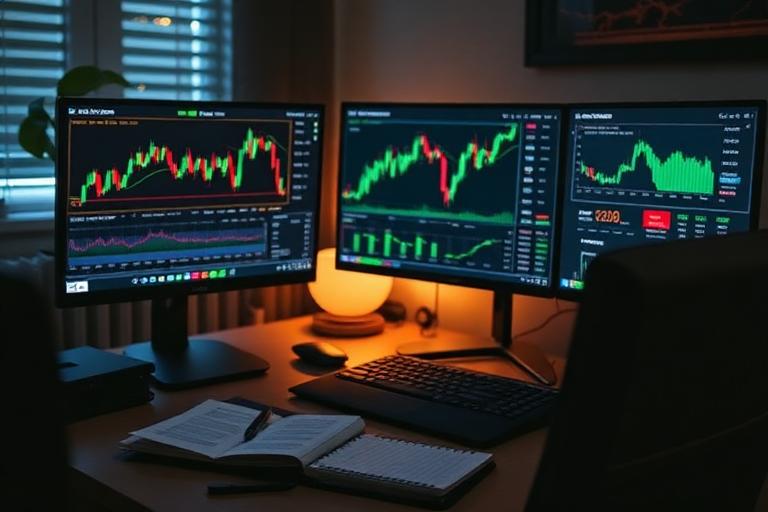
Funded trading has become the dominant on-ramp for skilled retail FX traders with no capital. You pay for an evaluation, prove you can hit a modest target without breaching daily and total drawdown limits, and the firm allocates capital with a profit split heavily in your favour. Done honestly, it is a genuine meritocracy — nobody cares about your degree, only your equity curve. But read the rules like a contract, because they are one. Look at the drawdown method, whether it trails, whether news trading is permitted, the payout schedule, and how long the firm has been paying traders. The rules are engineered to reward steady, small, repeatable gains, which is precisely the opposite of what most retail traders are taught to chase.
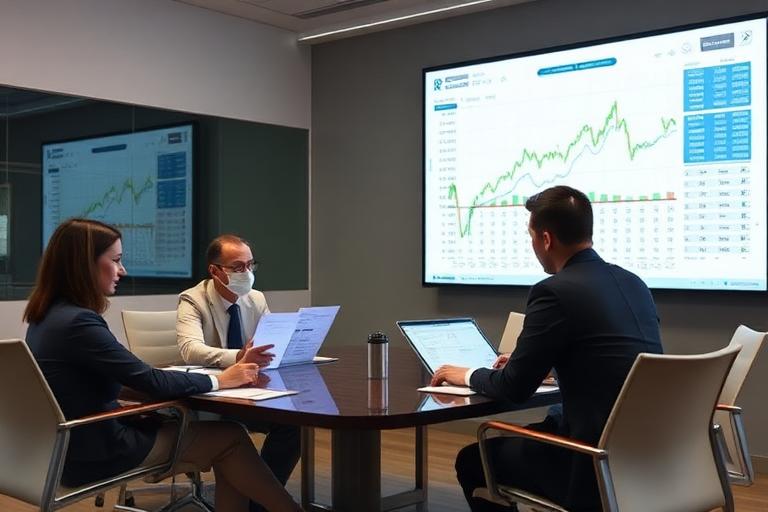
This is where the dependable money sits. A bank FX dealer quotes prices to corporate clients all day and earns a base salary with a bonus tied to the desk's performance — no personal capital at risk, ever. Corporate treasury is the quieter twin: every multinational needs someone hedging the currency exposure on its revenue, and those roles are stable, well paid and rarely advertised as "trading" jobs at all. Surrounding those desks are sales, structuring, settlement, risk and compliance functions filled by financial controllers, auditors, actuaries and underwriters. Brokerages themselves employ brokers, mortgage brokers and insurance brokers on similar commission structures, and the introducing-partner model pays on client volume rather than trading skill — profitable, but be clear that it is a sales job wearing a trader's clothes.
Modern FX is overwhelmingly automated. Pricing engines, smart order routers and execution algorithms are built by software engineers, data engineers, data scientists and DevOps engineers who often out-earn the discretionary traders sitting beside them. Latency, statistics and clean infrastructure decide who makes money in modern currency markets, and those are teachable, portable, hireable skills with a salary attached from day one. For anyone mathematically inclined and short of capital, this is comfortably the highest expected-value route into the FX industry.
Forex rewards preparation and destroys impatience. If you have capital, discipline and a genuine interest in macroeconomics, trading your own account is a legitimate secondary income that scales with the money behind it. If you have skill but no capital, funded accounts are the honest bridge. If you want a predictable pay cheque, target the desks, the treasury teams and the technology behind them, where the industry pays a salary regardless of what the market did this week. Test any offer against the wage calculator and compare it with the high salary rankings before you decide that speculation is the fastest path to money. Very often it is not.